CS2 Arbitrage Monitor
A Python data pipeline that tracks completed-sale prices for CS2 skins across marketplaces and alerts on profitable spreads.
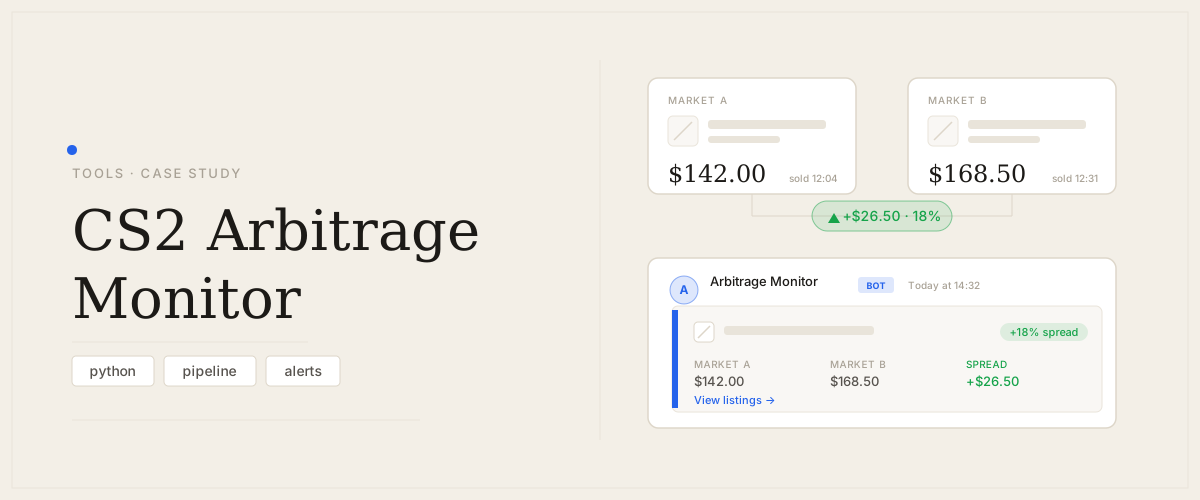
Skin prices for the same CS2 item can differ noticeably between Steam and other skin marketplaces, but spotting the gap by hand means watching several tabs at once. I built a data pipeline that watches for me and pings a Discord channel when a real arbitrage window opens.
The system runs in four stages. Connectors pull data per marketplace — a mix of scrapers and official API feeds. A sales price engine normalizes item names, deduplicates records, and stores historical prices. A matcher applies configurable spread rules to find items priced apart across venues. Alerts post an embed card to Discord with the item, per-marketplace sale prices and timestamps, the absolute and percentage spread, and links to each listing.
Stack
- Python — connectors, the price engine, and the matcher
- Per-marketplace connectors — scraping for some venues, official APIs for others
- Storage layer with migrations — historical completed-sale prices
- Declarative rule files in
src/rules/— minimum spread, item filters, cooldowns - Discord webhook — embed-card alerts to a single channel
Interesting decisions
I track completed-sale prices — realized transactions — rather than listing or asking prices. What a seller hopes to get is not what an item is worth; only closed sales give an honest arbitrage signal.
Detection logic lives in declarative rule files, not code. Spread thresholds, item filters, and cooldowns are all config, so I can tune what counts as an opportunity without editing the pipeline.
The whole thing is compliance-first: it respects each platform's terms of service, robots.txt, and rate limits, collects only public completed-sale data, and performs no automated purchasing or trading.